JUMP TO SECTION
A shower that suddenly stays cold creates pressure to buy a solution immediately. Start instead with a clear description of the interruption. Was hot water available earlier that day, did it fade gradually during use, or was the first ordinary use already cold? Those are different reports. This guide concerns a loss of useful hot water, not the familiar wait while warm water travels to a distant tap. It helps organise a service enquiry without asking you to inspect burners, wiring, valves or internal components. An online description cannot establish which part has failed.
Describe an interruption, not a diagnosis
A shower that suddenly stays cold creates pressure to buy a solution immediately. Start instead with a clear description of the interruption. Was hot water available earlier that day, did it fade gradually during use, or was the first ordinary use already cold? Those are different reports. This guide concerns a loss of useful hot water, not the familiar wait while warm water travels to a distant tap. It helps organise a service enquiry without asking you to inspect burners, wiring, valves or internal components. An online description cannot establish which part has failed.
Say whether the change affects the kitchen, bathroom and laundry, using what household members already noticed during ordinary use. Do not repeatedly run taps to prove a point or expose anyone to unpredictable temperatures. A problem at one fixture and a problem across the property should not be described as the same event. Note if the cold supply is also interrupted, because a water supply enquiry may need to be separated from a heating enquiry. Avoid claiming that a particular component is broken simply because a search result lists it as a common cause.
Identify which equipment actually serves the home
A useful first question is whether the property has its own water heater or receives hot water through shared building equipment. Tenants and apartment residents may need help from a property manager to identify the arrangement. Do not enter a locked plant room or change shared controls. If a model label can be photographed safely from the ground, capture it without opening covers. Otherwise use an invoice, handover document or existing manual. An exact model is more useful than an estimate of the system's age or the colour of its casing.
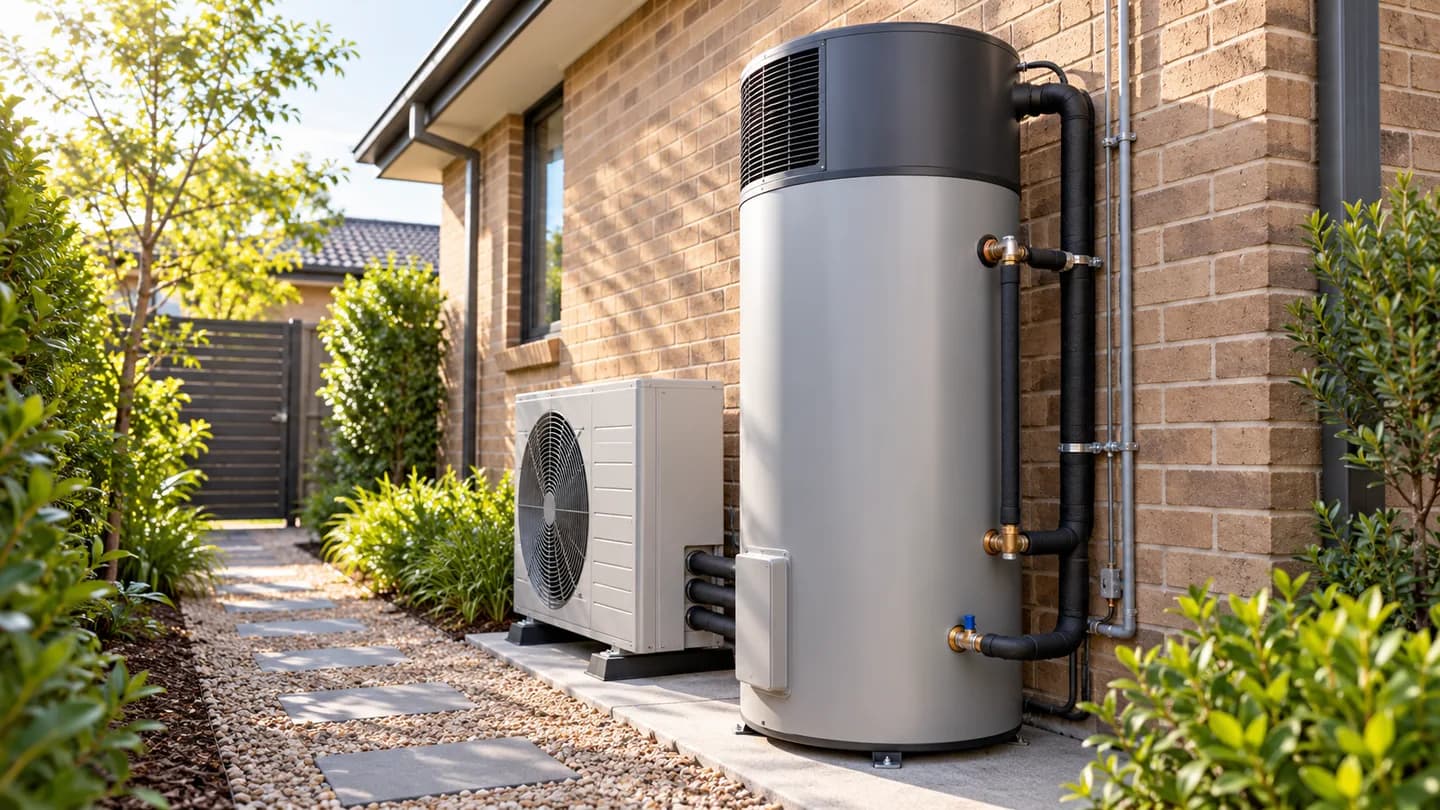
Australian Government guidance distinguishes storage and instantaneous systems. That distinction helps the service provider interpret your report; it does not identify the fault. Tell them if you do not know the system type. Where a solar arrangement has a separate booster, mention both components rather than describing only the tank. Rheem's troubleshooting guidance also directs owners to model-specific information. Manufacturer advice for a different heater should not become a reason to operate unfamiliar controls on yours. Ask which user document applies before following any ordinary operating instruction.
Build a short timeline from normal use
Write down when someone last had a normal shower and when someone first noticed the problem. Add any known power interruption, planned building work, appliance replacement or change in household occupancy. These are observations, not conclusions about what caused the fault. If there is an accessible display, record the exact message as seen. Do not clear its history or repeatedly restart equipment while waiting for advice. A photograph of the display, taken safely, avoids confusing one character with another when describing a code over the phone.
Include the household's recent pattern without turning it into a laboratory test. For example, several showers occurring close together is useful context if that genuinely happened. So is an unexplained loss of hot water on a day when nobody used it. Explain whether the problem has happened once or returned after previous service. If a repair was recently completed, have that job record available. A timeline can help the attending professional decide what needs checking; it cannot prove that demand, a timer, a supply interruption or a failed component is responsible.
Keep safety and service urgency separate from inconvenience
Do not remove panels, relight equipment without model-specific professional advice, bypass a safety device or operate a valve you cannot identify. Water near electrical equipment, an apparent gas escape, smoke or an immediate danger requires the relevant emergency response rather than an ordinary quote form. Keep people away from the affected area and seek emergency advice from the appropriate service. A lack of hot water can be very disruptive, but it does not make an unsafe investigation worthwhile. Do not climb onto a roof to inspect solar equipment.
When contacting a service provider, explain genuine household needs, including whether the property has no usable bathing facilities. That helps discuss arrangements without assuming that a particular response time is available. For a rental, tell the managing agent promptly and keep the repair request and instructions together. For a shared system, ask who is authorised to arrange attendance. These practical details matter because the person reporting the failure may not be the person who can approve work, provide access or agree to a replacement. Clarify those roles before an appointment is organised.
Ask for a diagnosis before a replacement decision
An assessment should distinguish the observed problem from the recommended remedy. Ask what was checked, what finding supports the diagnosis and whether the proposal is repair, further investigation or replacement. A repair recommendation should identify the work sufficiently for you to understand what is being approved. A replacement recommendation should explain why it is being considered rather than relying only on age. Do not assume that restoring hot water and changing the system type are the same project; electrical, gas, plumbing or siting work may need separate consideration.
Ask which parts of the proposed scope are confirmed and which remain conditional on access, testing or equipment availability. If the current fault has not been established, request that uncertainty in writing. Discuss the cost basis for an assessment separately from any subsequent work; this article supplies no prices. If warranty coverage may apply, check the manufacturer's process before authorising unrelated intervention. Grade A Plumbing is not represented here as manufacturer-authorised. Retain the model details, service findings and approved scope so that a future enquiry does not have to reconstruct the history from memory.
Keep temporary arrangements separate from the repair
If the assessment or parts cannot be arranged immediately, ask what temporary arrangements are actually available. Do not assume a provider offers loan equipment or a guaranteed restoration time. Clarify who would supply, install and remove anything temporary, what approvals would be required and how that work is charged. Avoid makeshift heaters, hoses or unsafe bathing arrangements. Temporary convenience should not become an undocumented alteration to the property's plumbing or electrical installation.
If more than one service is involved, nominate a person to collect the findings and communicate the next step. For example, an energy supply enquiry and a plumbing assessment may run separately without either proving the other's conclusion. Record appointment references and the work authorised, not just the names of people spoken to. Once supply is restored, tell the provider whether the original symptom has actually resolved in ordinary use. A clear completion record is more useful than assuming a warm tap at one moment settles every outstanding question.
Send an enquiry that can be acted on
A concise message can include your suburb and postcode, the equipment model if known, the last normal use, which outlets are affected and any visible warning message. Add safe access details and the name of the person authorised to approve work. Avoid sending account passwords or unrelated personal documents. If an image would help, ask how it should be supplied; do not assume a website form accepts attachments. Clearly state that you are requesting an assessment of a sudden loss of hot water rather than accepting a diagnosis already made online.
Contact Grade A Plumbing on (02) 5837 5457 or support@gradeaplumbing.store to discuss an assessment. Confirm current availability and the scope before proceeding. The related hot water service page explains the service category, while the existing system lifespan guide provides broader ownership context. Neither substitutes for examining the installed equipment. Once work is completed, record what was found, what changed and what ordinary operation should look like. If the symptom returns, report the new event and the previous reference rather than repeatedly trying different settings or assuming that another replacement is automatically needed.
Frequently asked questions
Does suddenly cold water mean the heater must be replaced?
No. A change in service is a symptom, not a replacement diagnosis. Explain the timeline and equipment details, then ask what assessment findings support repair, further investigation or replacement.
Should I keep restarting the heater before someone attends?
Do not repeatedly reset unfamiliar equipment or clear fault information. Record a safely visible message and seek model-specific advice. Leave internal components and safety devices to the appropriate professional.
Sources and further reading
- Rheem Australia: hot water system troubleshooting · Checked 2026-10-19
- Australian Government: hot water systems · Checked 2026-10-19