JUMP TO SECTION
A damaged downpipe connection can be a straightforward-looking problem with an incomplete visible story. The piece near ground level may be loose, cracked or displaced, while the roof collection and buried outlet remain out of sight. Begin by describing the visible join rather than declaring the whole drain collapsed. Is the concern a physical gap, water escaping in rain, movement after landscaping, or an impact from a vehicle or garden equipment? Those are different starting points. This guide is about assessing that interface, not a general sewer-versus-stormwater comparison or instructions to repair a roof drainage system.
Describe the connection that is actually visible
A damaged downpipe connection can be a straightforward-looking problem with an incomplete visible story. The piece near ground level may be loose, cracked or displaced, while the roof collection and buried outlet remain out of sight. Begin by describing the visible join rather than declaring the whole drain collapsed. Is the concern a physical gap, water escaping in rain, movement after landscaping, or an impact from a vehicle or garden equipment? Those are different starting points. This guide is about assessing that interface, not a general sewer-versus-stormwater comparison or instructions to repair a roof drainage system.
Photograph the area from safe ground if conditions permit, with a wider view as well as the specific join. Do not climb onto a roof, stand on furniture or remove a downpipe to look inside. Include nearby features that may affect access, such as a tank, fence, garden bed or fixed paving. A picture of a small crack without context can hide the fact that the connection is difficult to reach. Tell the provider whether you can see the full fitting or only one side. Keep inaccessible parts explicitly unknown so the assessment is not based on an assumption that the entire connection has already been examined.

Separate permanent damage from a rain-event observation
A physical defect can be described in dry weather; overflow behaviour depends on an event. State which you observed. If water escaped during rain, explain whether it came from the visible join, ran down the outside of the pipe from above, or pooled nearby without a clearly visible origin. Do not go outside during hazardous weather to obtain evidence. VICSES storm guidance places safety ahead of property tasks, and a drainage enquiry is not a reason to enter a dangerous area. Existing photographs or a description after the event are preferable to exposing yourself to falling branches, electrical hazards or moving water.
Timing matters without proving causation. Note whether the symptom followed a known impact, a garden level change or recent work, but distinguish an event you witnessed from a date you only suspect. If a nearby surface was raised, show the assessor where it changed; do not dig it away to expose a hidden connection. An external stream on a downpipe may need assessment of an upper section rather than only the bottom join. Conversely, a visibly separated lower piece deserves attention even if rain has not occurred since. Let these observations define the questions, not a blanket instruction to replace everything that can be seen.
Ask which part of the system the visit includes
The Building and Plumbing Commission distinguishes below-ground stormwater drainage work from other scopes and separately lists roofing stormwater work. The practical point for a homeowner is to ask whether the provider will assess the above-ground downpipe, the buried connection, or both. A visit booked to replace a visible fitting may not include investigation of a downstream pipe. A drain clearance may not include roof access. Avoid assuming the same trade description guarantees every part of the roof-to-outlet path has been examined. Explain the symptom before booking so the provider can confirm the relevant capability and any access limits.
Ask what would cause the investigation to expand. For example, if the visible connection appears intact but the water cannot leave through the downstream route, a different scope may be needed. This is an assessment question, not a remote diagnosis of blockage. If another provider must attend, ask how findings will be shared so each person knows which sections were actually checked. Keep an upper-roof recommendation separate from a below-ground drainage conclusion. When several trades are involved, the most useful outcome is a continuous explanation of the assessed path, with gaps marked, rather than several disconnected assurances that each visible component seems fine.
Consider rainwater tank connections before changing anything
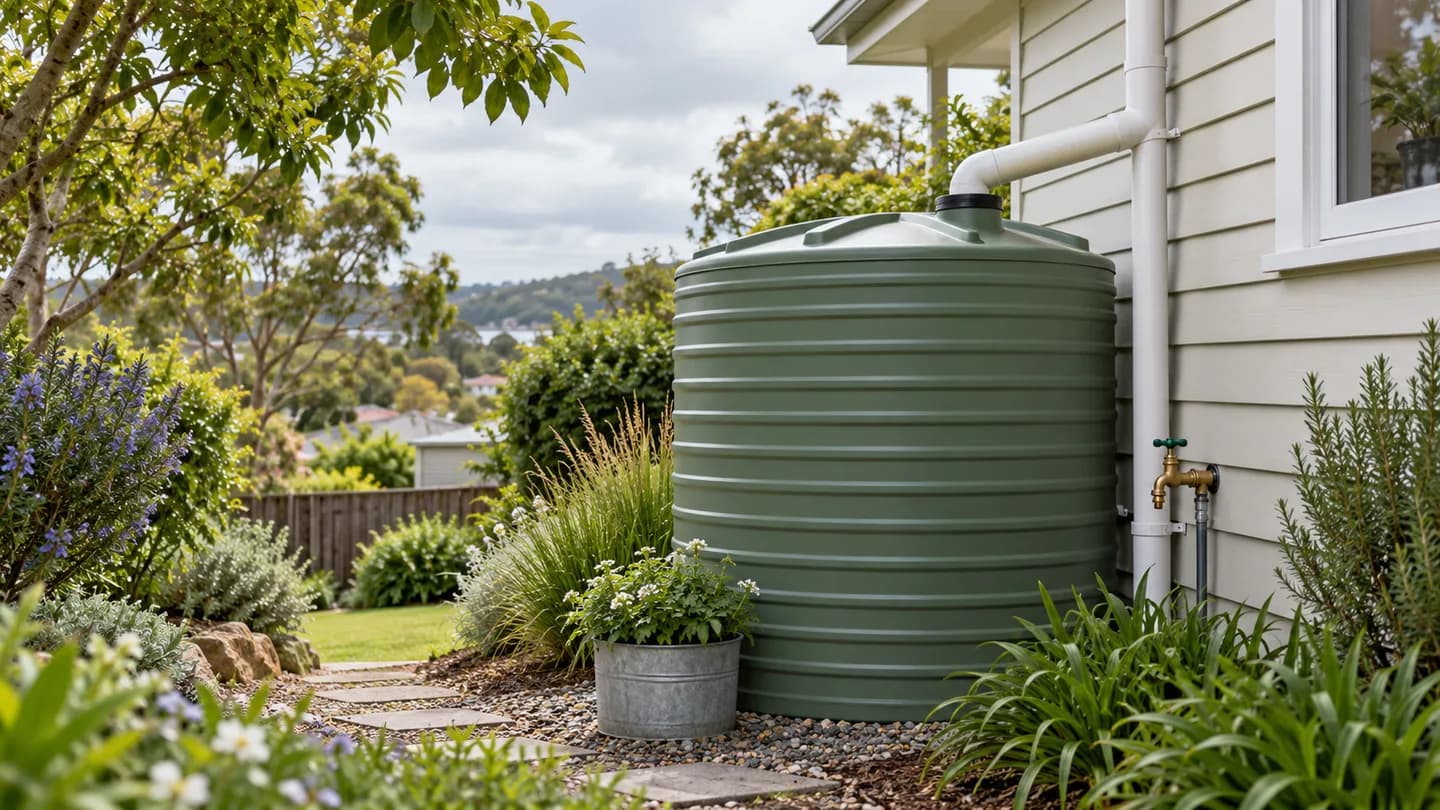
If the downpipe is associated with a rainwater tank, tell the assessor before any alteration is proposed. Victorian Government guidance describes different collection arrangements, including direct downpipe connections and charged systems with underground sections. A pipe going into the ground may therefore have a purpose that is not obvious from the garden. Do not assume it is an abandoned fitting or connect a loose piece to whichever outlet is nearest. The assessment should establish the actual arrangement and intended destination, particularly where a tank, first-flush device or overflow is part of the path.
Describe the tank's role as you understand it, but label uncertainty. You may know that the tank supplies a garden tap without knowing whether the pictured downpipe feeds it. If plans or handover documents exist, offer them for comparison with the site. Avoid removing screens, opening a tank or disconnecting pipework to trace the route. A repair should preserve the intended system function, not merely make the visible join look tidy. Ask whether the proposed work changes collection, overflow or access and whether further advice is needed. Cosmetic similarity between fittings does not establish that a substitute connection is suitable for the installation.
Define a repair outcome that can be checked
Before work starts, ask what the proposed repair is intended to achieve. Reconnecting a displaced pipe, replacing a damaged section and investigating restricted flow are not interchangeable descriptions. Clarify whether any surrounding excavation, wall fixings, paving work or tank-related work is included. If the provider cannot determine the full scope until the connection is examined, ask how the next step will be authorised. Avoid demanding a fixed repair conclusion from an image alone when the hidden connection has not been assessed. Equally, ask why a broad replacement is proposed if the evidence currently concerns only a specific interface.
At handover, ask what was checked and under what conditions. A dry-weather inspection, a controlled professional check and an observation during later rainfall provide different evidence. Do not manufacture a storm by climbing with a hose or running water onto a roof. If follow-up observation is recommended, ask what can be safely noticed from inside or at ground level and when to contact the provider. Any inaccessible section should remain identified as such. The record should explain the completed repair and limits without claiming every future rain event will behave identically. A realistic account is more useful for maintenance than an unsupported promise of permanent flood prevention.
Make access and surrounding surfaces part of the enquiry
Some connections sit beside narrow side passages, steep paths, retaining edges or densely planted beds. Describe those constraints and whether another owner or building manager controls access. Do not remove barriers or enter a neighbour's property to improve the view. If paving or landscaping may be disturbed, ask which provider will reinstate it and what finish is included. Keep drainage performance and decorative finishing as separate items so neither disappears from the conversation. An investigation should account for the route to the fitting as well as the fitting itself, especially when access equipment or a second appointment may be required.
For a Melbourne downpipe connection enquiry, contact Grade A Plumbing on (02) 5837 5457 or email support@gradeaplumbing.store. Describe the visible damage, when water was seen and whether a rainwater tank is involved. Confirm the provider's scope and current availability before booking. If conditions are unsafe during a storm, follow emergency advice rather than waiting at the connection to monitor it. A measured enquiry avoids two costly assumptions: that every overflowing join needs only a cosmetic replacement, or that every damaged-looking piece proves the whole drainage system has failed. The right next step depends on the actual path, access and assessed condition.
Frequently asked questions
Can I identify the buried outlet from the visible downpipe?
Not reliably from appearance alone. Plans and a property assessment may be needed, especially where a tank or charged collection system is present.
Does a bottom-join repair include the roof and underground drain?
Only if that scope has been agreed. Ask which sections are included and which require another assessment or provider.
Sources and further reading
- Building and Plumbing Commission: drainage work · Checked 2026-10-18
- Victoria State Emergency Service: storms · Checked 2026-10-18
- Victorian Government: getting the most out of a rainwater tank · Checked 2026-10-18